Sew In vs. Weft Extensions: Which Long-Lasting Method Is Best for Your Hair Type?
The method you use to apply hair extensions can alter the quality and feel of the extensions. Hair extensions can be used to elongate hair, make hair thicker and to try new hairstyles. If you are considering using hair extensions for any of these reasons, you need to familiarize yourself with the different hair extensions methods.
Sew in hair extensions and weft hair extensions are some of the methods that are permanent or long-lasting. Each method has its own set of requirements. Your lifestyle and commitment level to the upkeep of the extensions should be factored in when determining the method to use.
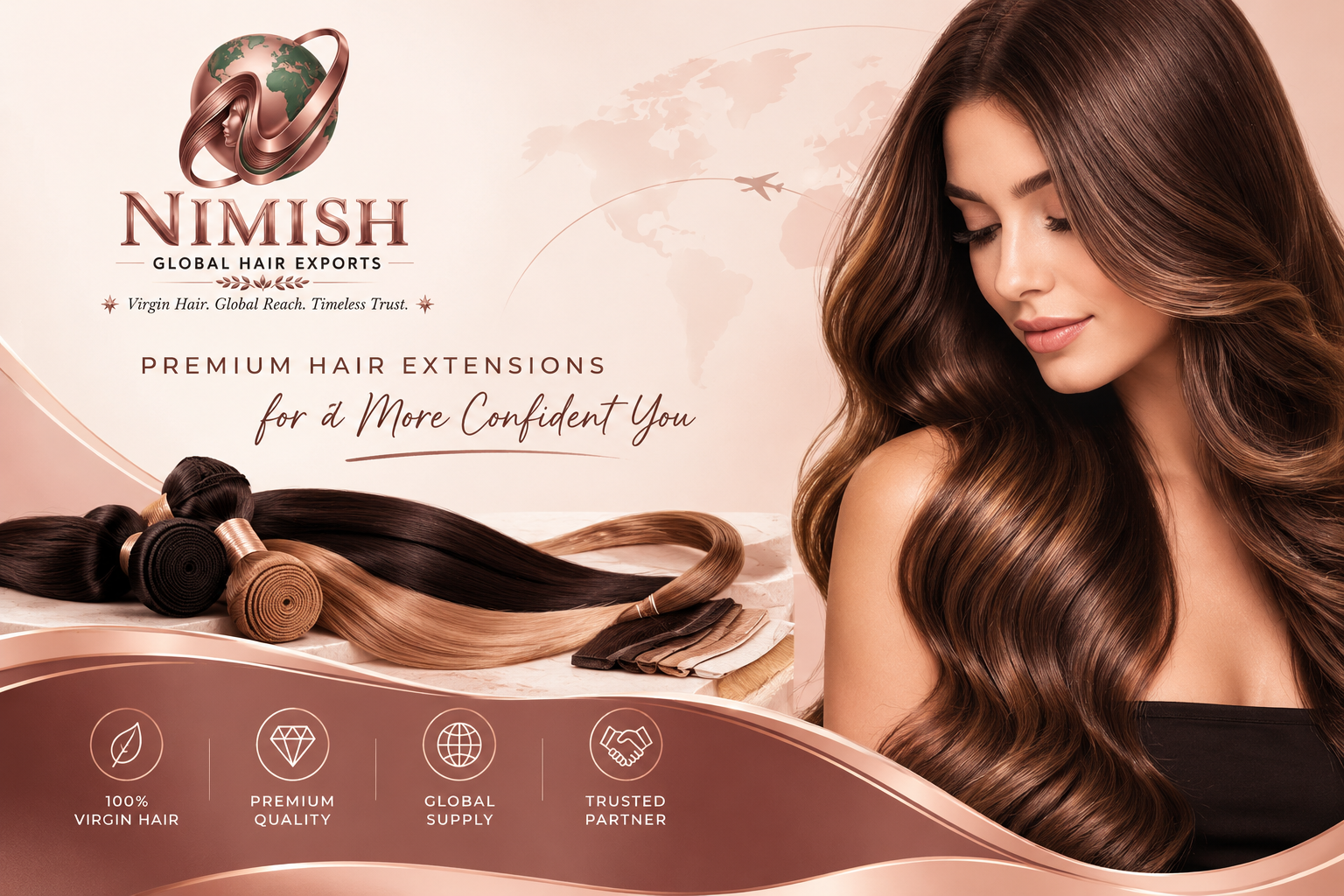
Nimishglobalhairexports has provided hair extensions to several customers and is aware of the various needs. Customers also vary. This article is a reference to salons in an effort to explain the differences between sew in and weft extensions.
What Are Sew-In Hair Extensions?
The natural hair is first braided into a base. Wefts of extension hair are sewn onto the braids with sewing thread and a needle.
Since the application is done with sewing, the process becomes adhesive and/or glue-free. Hence, users find it a better alternative for applying hair extensions.
Benefits of Sew In Hair Extensions
Some advantages of this type of extension include:
- A secure attachment
- Creates an elegant long-lasting hairstyle
- Does not require adhesives
- Great for creating large amounts of hair volume
- Availability in varying lengths and textures
- Can compliment thicker, more voluminous natural hair
Customers that wish for a hairstyle that is not short lived has an option for that with this type of extensions.
What Are Weft Hair Extensions?
Weft hair extensions are hair strands that are attached to a strip of hair and are then sold as one continuous piece. Weft hair extensions can be applied by various methods (i.e. sewing, bonding) which are usually performed by a professional.
There are various types of wefts and the choice is determined by the length, thickness, texture and hair type of the extensions.
Weft hair extensions are the favorite of stylists because of their adaptability to different situations. For example, stylists can tailor the weft extensions to the texture of the customer’s natural hair, and achieve the result the customer wants (i.e. longer, thicker, etc. hair).
Benefits of Weft Hair Extensions
Weft extensions have various advantages based on their construction and how they are applied.
These may include:
- Various ways of applying the extensions.
- Different weights and widths.
- Voluminous and natural looking styles.
- Ease of styling.
- Choices for varying hair patterns.
- Use in a salon setting.
Construction of the wefts plays an important role in the quality of the extensions.
Sew-In vs. Weft Hair Extensions: What's the Difference?
It’s important to distinguish that “sew-in” is a method of applying hair extensions, and “weft” is a construction of extension hair.
This means a weft can actually be used as part of a sew-in installation.
| Feature | Sew-In Hair Extensions | Weft Hair Extensions |
|---|---|---|
| What it describes | Application method | Extension construction |
| Attachment | Usually sewn to braided natural hair | Can be sewn or installed using other methods |
| Adhesive | Usually not required | Depends on installation method |
| Customization | Depends on the weft | Can be customized by width/length |
| Longevity | Depends on hair and maintenance | Depends on application and maintenance |
| Best suited for | Secure, longer-term styles | Flexible extension applications |
Understanding this distinction can help customers avoid comparing two products that are not exactly the same category.
Which Method Is Better for Your Hair Type?
While there are different ways of installing hair extensions, the most important consideration is the nature of your natural hair. Once that is analyzed, then the best method of installing hair extensions can be determined.
For Thick and Coarse Hair
Hair that is naturally coarse can easily support the weight of sewn in extensions. For a good installation, the extensions should be evenly distributed along the natural hair strands and tied off.
For the support of the extensions to be appropriate, the weight and quantity should be adjusted to the natural hair.
For Curly and Textured Hair
The sew-in method is one of the easiest ways to add hair extensions for textured hair. This is because the foundation of the sew-in is a styling method used to make hair extensions blend naturally with the hair.
For Fine and Thin Hair
The foundation of each of the wefts should be evenly distributed to minimize pulling of the natural hair.
For Straight Hair
Blending is important when using any type of extension. A close match of the texture and color will also help blending.
How Long Do Sew-In Hair Extensions Last?
The lifespan of sew in hair extensions depends on several factors, including:
- Hair quality
- Installation technique
- Natural hair type
- Maintenance routine
- Sleeping habits
- Washing frequency
- Styling practices
- Extension weight
A professional installation and proper aftercare can help maintain the hairstyle for longer. However, extensions should not be kept installed indefinitely. Natural hair and the scalp need appropriate care between applications.
How Long Do Weft Hair Extensions Last?
Weft hair extension longevity is determined by the quality of the hair and the method used to install them.
Hair extensions made from high quality human hair can be readjusted or removed based on how the hair is attached to the head.
Carefully follow the instructions given to you by your stylist on how to care for your hair extensions.
What Makes High-Quality Hair Extensions Important?
The quality of the hair used in the extension will be a factor in the result.
When assessing hair for extensions look for:
Natural Appearance
The hair should have a natural flow and movement.
Consistent Texture
The hair should have a consistent texture throughout in order to blend with the clients natural hair.
Strong Weft
Weft products should have a strong and secure construction.
Correct Density
Extension should have the correct density to achieve the customers desired results.
Correct Length
The length of the weave should be measured to blend in naturally with the client's hairline. It should also be long enough for the client to style it how they like.
Maintaining the Sew-In
Sew-Ins require some upkeep in order to look neat and to prevent discomfort.
Cleaning the Scalp
The person who did your extensions should tell you how often and what way to clean your scalp. Don’t let product buildup because that can make your scalp itch.
Brushing
Brush from the bottom to the top so it doesn't pull or snag.
While Sleeping
Use a pillowcase made from satin or other smooth fabrics to prevent your extensions from getting tangled.
Heat
Don't use heat on your extensions or your natural hair.
Check Your Extensions
Your extensions may need to be checked by the salon to make sure there isn't too much tension on your head.
Weft Extensions
Detangle weft extensions before washing them.
After washing weft extensions, don’t let them dry fully.
When using heat on weft extensions, don’t use it too often.
Store weft extensions in a bag to keep them from getting tangled.
Preserve the quality of your extensions by following the practices above.
Choosing the Right Hair Extensions Supplier
For salons, retailers, distributors, and businesses, choosing a reliable hair extensions suppliers is just as important as selecting the right extension method.
When preparing to purchase from a new supplier, evaluate the following:
Range of Products
The best supplier will have many options of colors, lengths, and textures. They will also sell different methods of attachment.
Hair Placement
Identifying the source of the hair is very important. The best supplier will use 100% virgin Remy human hair.
Wefts
If you are purchasing wefts, you will want to see samples of the stitching and the overall construction and width of the weft.
Consistent Quality
The best suppliers will provide consistent products of even length, texture and color.
E-Commerce
Familiarize yourself with the terms the supplier will use for product specifications and shipping and is bound to use for wholesale and consignments.
Why Choose Nimishglobalhairexports?
Nimishglobalhairexports provides hair extensions to customers, salons, and businesses.
There are multiple aspects to consider besides price when evaluating hair extensions suppliers. These include quality of hair extensions, the range of products offered, flexibility provided by the supplier in terms of order customization, order packaging and shipping support provided by the supplier, and consistency in the supplier’s services.
Wefts and sew-in hair extensions are constructed in similar fashion. Knowledge about the structure of these hair extensions combined with understanding of their use can help in selection of the appropriate hair extensions.
Sew In or Weft: Which Should You Choose?
The best option depends upon your needs.
Choose to sew in hair extensions when you require a more secure installation method. Also, choose this method if you have a strong and sufficient natural hair base to support the method.
Choose weft hair extensions for more construction and installation options.
Depending on the client's natural hair condition and the desired style, and also on the weight of the extension to be used and the recommended method of attachment by the stylist, the best method of attachment of hair extension is determined.
Final Thoughts
Sew-in and weft hair extensions serve similar functions, giving individuals the opportunity to elongate and add volume to their hair. However, sew-in and weft describe different things. Sew-in hair extension installation involves sewing hair extension wefts to the hair.
There are other factors that determine the type of hair extension best suited to an individual. Some of these factors are type of natural hair, lifestyle, maintenance, budget, and the expertise of the stylist.
Hair extension retailers also have to take these factors into consideration to choose the right hair extensions to sell in their store. This is especially true for hair extension wholesalers. They have to compare the quality of extensions sold by various wholesalers and also the reliability of the wholesalers to thrive in business.
Nimishglobalhairexports is one of the companies that provide hair extension products to the public and professionals.